

THE LOW TIDE LINE: The Biggest Surf Fishing Secret Nobody Talks About
One of the biggest tips in surf fishing that no one is talking about is the low tide line.

You'll hear a lot of people talk about fishing at high tide, and that has its advantages. There's definitely a time and place to fish high tide.
But low tide is actually a huge advantage—an opportunity that a lot of fishermen are overlooking.
So I want to explain a few things.
First of all, in ecosystems, most of the energy is exchanged along the edges of things. When I studied permaculture, I heard Geoff Lawton talk about the edge of the tree line.
If you look at a forest where it meets a pasture, that edge is where the most energy is exchanged. It's where the airflow reaches the trees, where the most sunlight reaches the base of the forest, where you'll find the greatest diversity of plants and ground cover, and where you'll see the most new growth. It's also where animals gather to take advantage of all those nutrients. The same thing happens in every ecosystem.
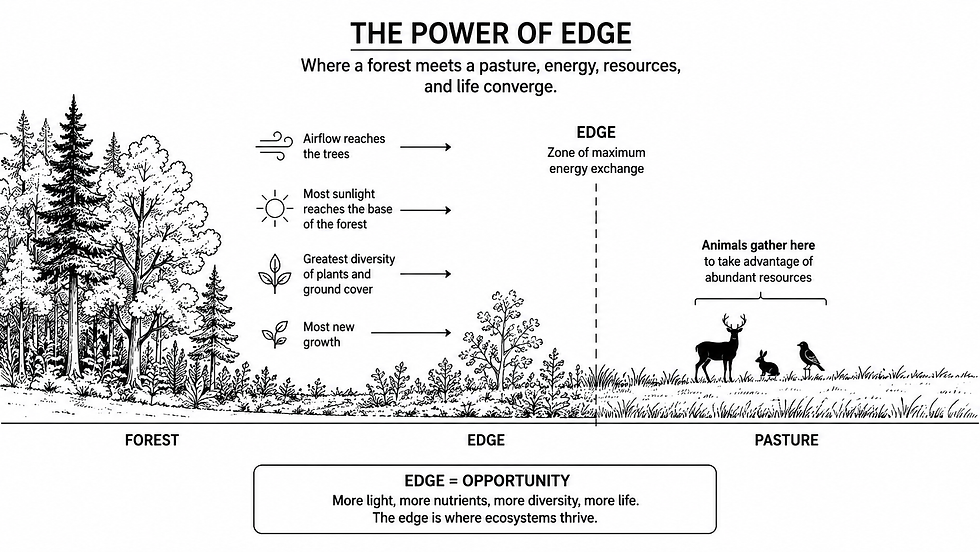
The low tide line is the edge between the deep blue sea and the shallow intertidal zone. It's where the waves crash, churn, and stir everything up. This surf zone, all within casting distance, is incredibly attractive to many species of wildlife.
Fish generally don't want to go much deeper than the low tide line because there's less food. It's almost like leaving the edge of a forest and walking out into a desert. If you were to swim out into deeper water, you'd find underwater sand dunes with far less diversity and activity than you find near the surf zone.
At the same time, fish don't want to go too shallow either. They risk getting trapped in tide pools at low tide, where birds can easily spot and eat them. So fish are constantly on the move. At high tide they push toward the high tide line, and at low tide they retreat back toward the low tide line.
Let's talk about sandy beaches versus reefy beaches because it's an important distinction.
On sandy beaches you'll find species like surf perch. High tide is an excellent time to fish because the troughs fill, sand crab beds get washed out, and perch move up along the swash zone to feed on sand crabs being carried back into the water.


But low tide has advantages too. At low tide, the sandbars and troughs become exposed, allowing you to identify the biggest cuts in the beach. These cuts act like highways that fish use to travel between deeper water and the shallow feeding areas. Fish come up through a cut into the troughs, feed along the sandbars, then exit through the same cut and travel down the beach looking for another opening.


By identifying these travel routes at low tide, you can better predict where fish will move as the tide changes.
On sandy beaches, both high tide and low tide have advantages. You can fish high tide, low tide, or the incoming tide successfully. The only time I generally avoid is when the tide is ripping out quickly, because fish are leaving the shallow troughs and heading back to deeper, safer water.

Now let's talk about reefy beaches. All along the California coast, you'll encounter reef structure.

These reefs exist where the bedrock of the continent extends into the ocean. Over time, waves erode away the sand, exposing the rock beneath. Unlike shifting sand, rock provides a stable foundation where plants and marine life can establish themselves. The rocks also break wave energy, creating protected pockets.
Those protected pockets hold halibut. Rock crevices hold rockfish. Kelp growing on the reef provides habitat for calico bass. At high tide, species like sheephead move onto the reefs to feed on crabs, octopus, and other prey.
Low tide gives you the opportunity to actually see these holes, kelp edges, and underwater structure. You can identify them, study them, and make much more precise casts.

Think about it this way: fish can always stay around the low tide line. They can only move toward the high tide line when the tide is high.

For the rest of the day, they're concentrated around the low tide line or in deeper pockets. In many ways, the low tide line is home base for fish. When the tide comes in, they may move higher to feed, but when it goes out, they retreat back toward the low tide line.
That's why low tide concentrates fish and creates such a powerful opportunity for surf anglers.
Around reef structure you'll find rockfish, halibut on sandy patches, sea bass moving through temporarily, and calico bass living in the kelp attached to the reef.
Every organism has specific environmental conditions it needs to survive. Mussels, for example, only grow at certain tidal heights because they require the right balance of time underwater and time exposed.
At low tide, you gain access to all of this structure. You can see it, understand it, and fish it much more effectively.
At high tide, much of that structure is hidden. You can still fish it by standing on rocks or cliffs and soaking squid with a heavy weight, but unless you know exactly where those pockets are, you're essentially blind casting.
One technique I've used is exploring a reef at low tide, marking where the pockets are, then returning at high tide and casting to those exact locations.

If you know where to stand and exactly where to cast, you can consistently put your bait into productive honey holes. If you don't, it's like throwing darts in the dark.
So spend time around reefs at low tide. Study the structure. Learn where to stand and where to cast when the tide comes back in.


Fish the low tide.
A lot of fishermen only talk about fishing high tide, but many of the most experienced and successful anglers will tell you they only fish low tide. The low tide line is a major edge in the ecosystem, and fish spend a tremendous amount of time there.

Go experiment with these principles and see how they work for yourself. Then come back and leave a comment. I'd love for the @VINCEGOESFISHING community to become a place where anglers share knowledge and help each other learn.

Fish safe, fish hard, and keep fishing fun. @VINCEGOESFISHING

ACCESS A VIDEO VERSION OF THIS BLOG POST ON YOUTUBE.COM/@VINCEGOESFISHING THE LOW TIDE LINE: The Biggest Surf Fishing Secret Nobody Talks About


